
In March 2026, residents in Pune’s Mhalunge area reported a disturbing sight. Red bloodworms were emerging from their household taps, along with murky, foul-smelling water. The contamination was traced to polluted river water and failures in the local treatment system, leaving thousands of households worried about the safety of their drinking water.
Unfortunately, this is not an isolated incident. Across India, similar reports of contaminated tap water, sewage entering pipelines, and polluted groundwater are becoming increasingly common. These growing incidents of water contamination are warnings that clean drinking water cannot be taken for granted, even in urban areas with the most modern infrastructure.
Growing Water Safety Crisis
India’s water quality challenge is both widespread and persistent. Between February 2025 and January 2026, contaminated piped water triggered disease outbreaks in at least 26 cities across 22 states and union territories, affecting thousands of people.
Government testing also highlights the scale of the issue. In 2025–26, over 63.9 lakh drinking water samples were tested across India, with more than 1.61 lakh found to be contaminated.
Beyond individual incidents, structural problems are also contributing to the crisis. Ageing pipelines, sewage leakage, poorly maintained treatment systems, and patchy water supply can allow contaminants to enter household water lines. In some areas, corroded pipes running close to sewage lines have raised concerns about cross-contamination in urban water networks.
Groundwater, the primary drinking water source for much of rural India, also faces significant challenges. Studies show that nitrate contamination exceeds safe limits in nearly 20% of monitored groundwater samples, while fluoride and arsenic contamination affect many regions.
Why You Shouldn’t Take Water Quality for Granted
Many households assume that water supplied through municipal pipelines is automatically safe to drink. While municipal treatment plants are designed to ensure quality, contamination can occur at several points between water treatment and the household tap.
Beyond microbial contamination, chemical pollutants in water, such as arsenic, fluoride, and heavy metals, can pose serious long-term health risks. Prolonged exposure may contribute to problems such as kidney damage, bone disorders, neurological complications or cancer.
This is why simply boiling water or relying on basic filtration methods may not be sufficient to address all potential contaminants.
How to Choose a Good Water Purifier for Home?
Given the uncertainties around water quality, a dependable water purification system can play an important role in protecting family health. When selecting a purifier, you should look for systems that offer:
● Multi-stage purification: Effective purifiers typically use multiple filtration processes to remove bacteria, viruses, sediments, and dissolved impurities.
● Advanced purification technologies: Technologies such as RO, UV, and UF filtration can help tackle different types of contaminants, including microbes and chemical pollutants.
● Consistent purification performance: A reliable water purifier should maintain performance even when water quality fluctuates.
● Trusted quality standards: Choosing a good water purifier system from a recognised and trusted brand ensures that purification technology meets established safety standards.
A good water purifier that fulfils this checklist ensures that it can handle a range of contaminants commonly found in Indian water sources.
The Smarter Approach to Safe Drinking Water at Home
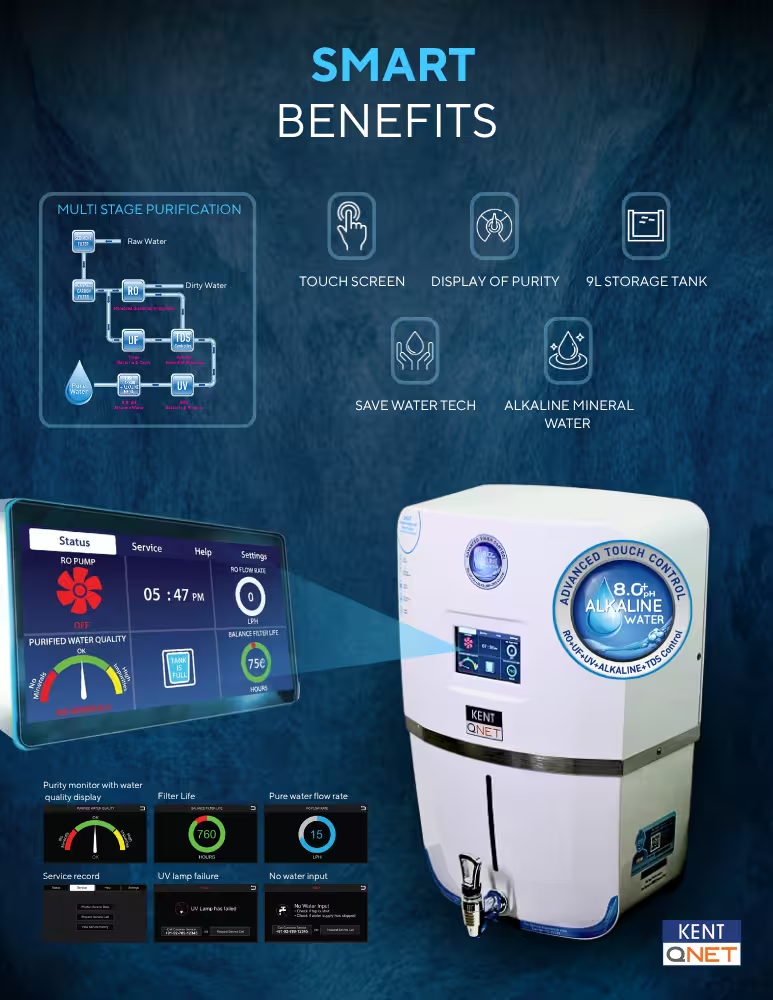
As awareness about water quality grows, more families are investing in advanced purification solutions to ensure the safety of their drinking water.
Modern water purifiers like the KENT-QNET SMART Alkaline-Mineral RO Water Purifier combine multiple purification technologies designed to remove harmful contaminants while preserving essential minerals. Such RO water purifier systems are built to address the complex mix of pollutants that may be present in both municipal and groundwater sources.
Technologies such as reverse osmosis are widely used to remove dissolved contaminants, heavy metals, and microbes from water. This modern water purification system also uses Ultrafiltration and Ultraviolet technologies, and provides pure and healthy alkaline water with pH levels of 8+.
By integrating advanced purification processes with reliable engineering, these RO water purifier systems are capable of removing 99% of pollutants, providing households with an added layer of protection against waterborne risks.
Watch this video on water purification and why the KENT water purifier is your best option
Take Control of Your Drinking Water Quality
Access to safe drinking water cannot be taken for granted anymore. While governments and local authorities continue working to improve water infrastructure and monitoring systems, everyone must take a proactive role towards ensuring we are consuming clean water.
Being aware of contamination risks, regular maintenance and cleaning of water storage systems, and investing in reliable purification solutions are simple but powerful steps. Because when it comes to drinking water, safety should never be left to chance.